Commercial Cleaning
The core contract program for occupied commercial buildings and mixed facilities.
Learn more
Services
Zenqly organises commercial cleaning as a set of clear services. Some facilities need a standing program. Others need a defined project: a floor, a set of windows, a carpet reset, or a post-construction clean.
This page is the map. Each service has its own scope, its own page, and its own place in a quote. If you already know the building type, you can also start from industries we serve.
All services
Choose the page that matches the work. Combining services is normal. The quote should say how they fit together so nothing is assumed.
The core contract program for occupied commercial buildings and mixed facilities.
Learn moreDesks, rooms, washrooms, and pantries on a schedule that fits the workplace.
Learn more
Steady janitorial coverage, including day-porter style tasks when the scope calls for them.
Learn more
Plants, shops, and support areas cleaned without ignoring how production runs.
Learn more
Periodic care for carpet in offices, retail, and shared commercial rooms.
Learn more
Detail cleaning after build-out so a site can move toward occupancy.
Learn more
Interior glass and agreed exterior glass on commercial properties.
Learn more
Hard-floor care, from daily soil removal to periodic finish work.
Learn more
Waiting rooms, exam rooms, and admin areas cleaned with a tighter touch-point list.
Learn more
Aisles, docks, amenities, and the offices inside a distribution building.
Learn more
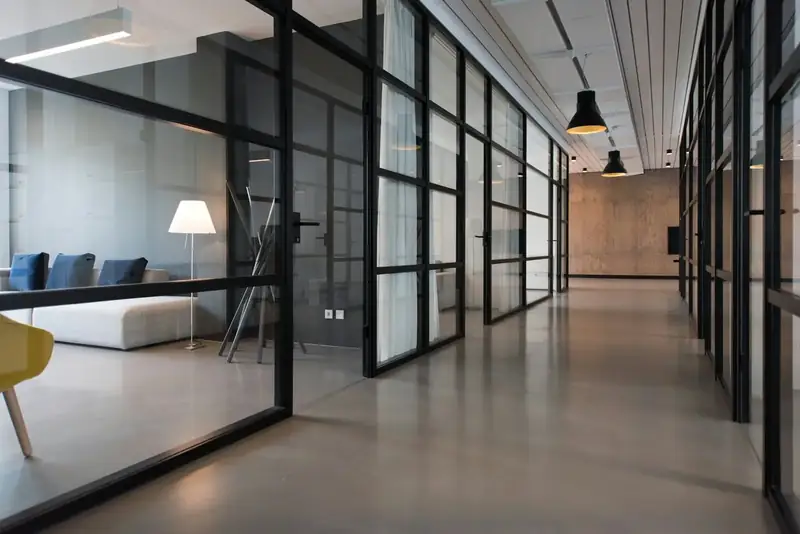
Periodic resets, including office deep cleaning and commercial kitchen detail work.
Learn moreMost requests fall into three shapes. A standing program keeps an occupied building at an agreed standard. A periodic service handles carpet, windows, floors, or a deep clean on a longer cycle. A project clean closes out construction or prepares a space for a new occupant.
The detailed program for occupied buildings lives on the commercial cleaning services page. Office-led work is described under office cleaning, and steady attendant-style coverage under janitorial services.
Repeated visits with a written task list. Useful for offices, retail, clinics, and buildings with shared washrooms and lobbies.
Carpet, glass, hard floors, and deep cleans scheduled so they do not fight the daily program.
Handover cleaning, a reset before occupancy, or a recovery after a fit-out. The end point is a finished condition, not an open-ended visit.
The same service name can mean different rooms. Office cleaning in a professional suite is not the same task list as retail cleaning on a sales floor. Use the industry overview when you want to see the building first, then open the service page that matches the work.
Workstations, meeting rooms, reception, kitchens, and washrooms.
Sales floors, fitting rooms, entries, and back rooms around trading hours.
Aisles, docks, amenities, and attached offices.
Support spaces and agreed production areas, timed around operations.
Waiting rooms, exam rooms, washrooms, and admin areas.
Post-construction and fit-out cleans before or at handover.
Quality is the scope being met on ordinary days, not a speech after a complaint. Zenqly ties reviews to the written list: missed rooms, wrong timing, or a task that no longer matches the site. When a floor type or a tenant changes, the document changes with it.
That is also why specialist work stays on its own page. A nightly office clean does not silently include a full carpet extraction or exterior window work unless the quote says it does.
Facility managers often arrive with three tabs open and the same rooms described three ways. A nightly reset, a janitorial contract, and a commercial program can be one scope with clear lines, or three purchases that trip over each other. Use the pages to separate the work, then ask for one quote that shows the lines.
Start with the occupied building. If people use it every day, the base is usually commercial cleaning services or, when the floor is a workplace, office cleaning. If the contract language on your side says janitorial, read janitorial services and use that name in the brief. The rooms do not change because the heading changed. The daytime presence might.
Add specialists only for work the base crew should not pretend to finish. Carpet extraction, exterior glass, a hard-floor recovery, and a post-construction pass each have a clock and a method. Putting them inside an unnamed hourly rate makes the nightly clean late and the specialist result thin. The service cards above exist so those clocks stay visible.
Industrial sites, warehouses, clinics, and stores change the base list rather than replacing the idea of a scope. An industrial amenity block can still be janitorial. The shop floor cannot be copied from an office kitchen. A clinic can still be cleaned at night, but the touch-point list is not the corporate one. Open the matching page before you send a square footage alone.
Geography is a second choice, not a second service menu. Toronto, Calgary, and Vancouver pages explain access and the kind of brief that city tends to send. They do not invent a different catalogue. If your building is elsewhere in Canada, the same service pages still define the work. Say the city on the quote form and expect a direct answer about whether the timing can be met.
When you write, name the outcome you want in a month: washrooms that hold through the afternoon, a lobby that survives wet weather, a suite that can be occupied after a fit-out. The service mix follows that sentence more reliably than a package name.
Name the facility, the city, and whether you need a standing program, a project, or both. We will outline a scope from there.