How to Practice Detachment in Chaotic Moments
When pressure rises, stillness wins. Discover how daily detachment keeps your energy sharp and your responses intentional.

Practicing detachment daily
In chaos, the loudest voice isn’t always the wisest. People rush to fix, explain, defend — trying to regain control. But real control often comes from doing less, not more. Practicing detachment is about learning to not bite the hook — the one baited with emotion, urgency, and noise.
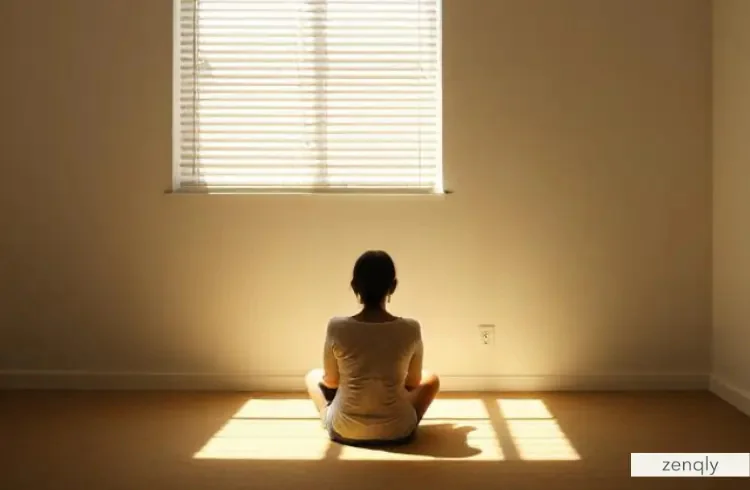
Some things don’t need your reaction. Some storms pass quicker when you stop running into the wind. Detachment is that pause — the moment between the trigger and the choice.
Emotional distance without emotional disconnection
The key isn’t shutting down. It’s stepping back just far enough to see clearly. Chaos tempts you to over-personalize. But not everything thrown your way is yours to catch.
In a heated moment, don’t match the energy — set your own. Lowering your emotional volume makes people reveal theirs. That’s how you learn what’s real and what’s just noise.
Start with breath — not as some mystical act, but as a reset. A few seconds can slow the brain’s spiral. And in that space, choose response over reaction. You don’t have to match their panic with yours. You don’t need to prove your calm either. Just be it.
Mastering the art of non-reaction
Let go of the reflex to fix things instantly. Most problems aren’t solved in the heat — they’re just amplified. Detachment gives you time, and time gives you leverage.
Here’s the truth: people who can stay still under pressure always hold more power. They’re not frozen — they’re watching. Thinking. They move when it’s smart, not when it’s loud.
Start practicing this in small ways. When someone disrespects you subtly, don’t flinch. When a conversation gets tense, don’t rush to fill the silence. Let it hang. Let others feel their own weight. It teaches them something — and reminds you of yours.
When everything feels urgent — detach
Urgency is often manufactured. Most “emergencies” aren’t — they’re just pressure dressed as importance. Learn to question urgency before reacting to it. Ask yourself: Who benefits from me panicking? Usually, it’s not you.
Detach by grounding in what is within reach. Your posture. Your tone. Your boundaries. You can’t always control what happens — but you can control what you let inside. That choice adds up.
And here’s the shift: when you stop absorbing everything, people sense it. They either rise to your stillness, or they fall away from it. Either way, you win. Either way, you stay centered.
You don’t need to detach from life — just from the urge to micromanage it. Let people misunderstand you. Let time reveal what words can’t. Chaos loves reaction. Don’t feed it.
The world doesn’t hand peace to you. You build it — moment by moment, breath by breath — especially when it’s hardest. That’s when it matters most.
If you can stay calm when others unravel, you're not behind — you're ahead. Keep that edge. Don’t let chaos make you forget who you are.